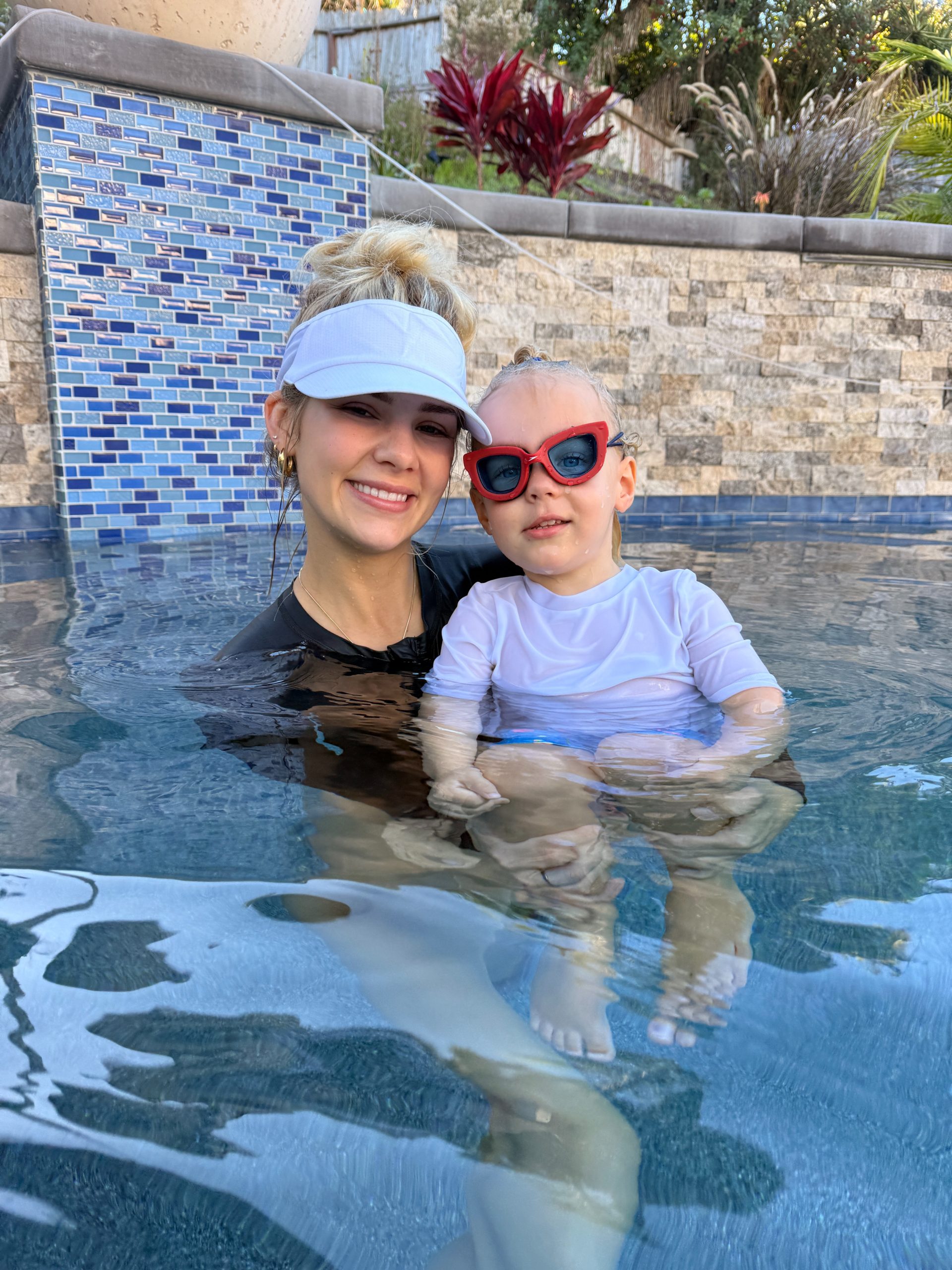
The preparation behind a personal lesson.
From the poolside, you see the lesson. You see your child meeting someone new, listening to an explanation, and deciding whether they’re ready to try. What you don’t see is all the preparation that person brings into the water.
It’s a fair thing to ask about. You’re trusting someone with your child, and a friendly introduction is only part of the picture. Here’s a closer look at how our Drowning Prevention Specialists prepare—and why that matters when it’s your family arriving with the towel and goggles.
200+ hours of training
Our published training program includes practical and theoretical preparation in swim instruction.
Learning continues
Annual educational advancement is part of the team’s ongoing preparation.
Training information: Swim Synergy’s About and team page.
It starts with the person doing the teaching
Being comfortable in the water and helping someone else learn are different skills. Teaching asks you to explain, pay attention, and connect with a person whose experience may be very different from your own.
Swim Synergy’s team selection emphasizes an ability to engage with young learners and a commitment to aquatic safety. That human side matters. A child who is full of questions needs someone willing to listen. A quieter child may need room to get acquainted. And the parent standing nearby wants to understand what is happening, too.
Our specialists bring their training to that relationship. Families bring something equally useful: knowledge of their own swimmer. Tell us about previous lessons, worries, communication preferences, or the little things that help your child feel understood.
What goes into the training?
Swim Synergy describes a training program of more than 200 hours, covering both the practical and theoretical sides of swim instruction. Those two parts belong together: understanding teaching principles and developing the ability to apply instruction in the water.
For families, the value of preparation shows up in everyday questions. Can someone explain what a swimmer is working on? Can you talk about what felt difficult? Do you understand what the next step is intended to accomplish? Those are useful conversations to have throughout lessons.
A training-hour total gives you one piece of information. It is also worth getting to know the specialist assigned to your swimmer. Ask about their experience with the relevant age group and how you can discuss your child’s learning. You don’t need to know the technical vocabulary to ask a good question.
What “Swim Synergy Certified” means
Our instructors are Swim Synergy Certified Drowning Prevention Specialists. “Swim Synergy Certified” is our program’s designation. It should be distinguished from credentials issued by outside organizations.
Our team page separately lists American Red Cross CPR and First Aid certification, infant and toddler swim instruction certification, and TrustLine registration. These address different aspects of preparation and screening. CPR and First Aid relate to emergency response; TrustLine is background screening, not a swimming qualification.
When you’re getting to know your specialist, you’re welcome to ask about their current credentials and relevant experience. Clear answers help you understand the person teaching your swimmer without having to untangle a list of titles.
Continuing education keeps learning part of the job
The team’s published standards include annual educational advancement. Learning is part of being a teacher, too.
For a family, that commitment is a reason to keep the conversation open. Share a change you’ve noticed, ask what a lesson is focusing on, or explain something that seemed different this week. Your observations can make the discussion more useful.
Perhaps your child happily talks about swimming at home but becomes quiet at the pool. Perhaps they’ve had a break and you’re unsure what they remember. Those details are worth mentioning. They tell a fuller story than “beginner” or “has taken lessons before.”
A real person beside your swimmer
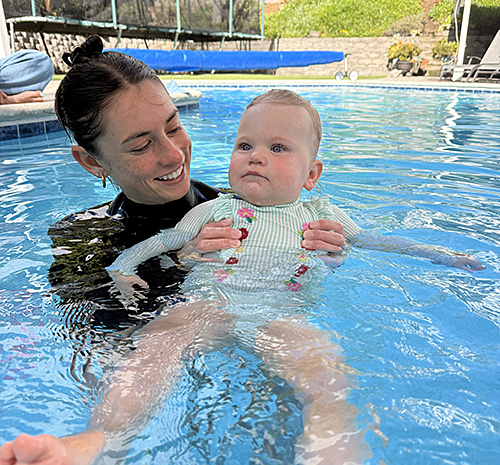
A lesson involves more than explaining a skill. There is a person to get to know, a response to notice, and a conversation to have with the family. Our Swim Synergy Certified Drowning Prevention Specialists bring their preparation to that individual relationship.
If your swimmer needs a little time to get acquainted, tell us. If something helped in a previous lesson, share it. Those everyday details help make the conversation about your child, rather than a checklist of skills.
What this means beside the pool
Room for individual attention
Private lessons pair one swimmer with one specialist. That gives the teaching a clear focus: the person learning in that lesson.
Questions are welcome
Ask what an activity is intended to develop and how to talk about progress. You should not need to guess from the poolside.
Progress is personal
Discuss your swimmer’s starting point and goals. Training does not mean every child will reach the same skill on the same date.
Your knowledge matters
You know your child beyond the pool. Sharing what you notice helps make the conversation specific to your family.
For example, instead of asking only, “Did today go well?”, you might ask, “What were you working on, and what should I understand about that?” It invites an explanation you can use. For a nervous beginner, our guide to sharing concerns before lessons offers a helpful starting point.
Prepared teachers, realistic expectations
The words “Drowning Prevention” describe a serious purpose. They do not mean a swimmer becomes drown-proof. The American Academy of Pediatrics explains that lessons are one layer of protection, alongside close, attentive supervision and barriers that prevent unsupervised access to water.
That matters even when a child looks more comfortable or is proud of a new skill. Ask questions about their progress, and keep the protective habits around the pool in place.
Care and preparation belong together
Our owner, Krista Azzeh, cares deeply about helping families and making a difference through her work. Training gives that care a practical foundation. The goal is a lesson experience where the teaching is taken seriously and the swimmer feels seen.
If you’re considering lessons, explore our team and lesson options. For the practical questions about choosing a location and planning a routine, our local parent guide can help. We’d love to hear what matters to your family.