The Swim Synergy Journal · A parent’s guide
A thoughtful start begins with a better conversation.
What to share, what to ask, and how to make the first lesson feel less unknown—for you and your child.
Your starting point
Observe before you label.
Describe the specific situations your child enjoys and the moments that feel difficult.
Ask before you assume.
Discuss the instructor’s approach, your role, and how you’ll receive feedback.
Your child may happily talk about swimming at home, then become hesitant when it is time to approach the pool. Or they may tell you clearly that they do not want water near their face.
When you are looking for swim lessons, that can leave you wondering what to say, what to expect, and whether you should wait.
A useful first step is a conversation with the instructor before the lesson. You do not need to arrive with a solution. Specific information about your child gives you and the instructor a better starting point.
For families considering private swim lessons in North County San Diego, here is what to share and what to ask.
Describe what “afraid of the water” looks like
That phrase can mean different things for different children.
Your child might enjoy standing on the pool steps but dislike splashes. They might be comfortable with you in the water but hesitant around a new adult. They might worry about putting their face in, leaving the wall, or entering a pool they have not visited before.
Instead of saying only “she is nervous,” try an observation:
“She likes sitting on the steps, but she becomes upset when water gets near her eyes.”
Or:
“He enjoys swimming with us, but he has never taken a lesson with an instructor.”
Concrete examples help the instructor understand the situation without making assumptions.
Share previous experiences
Let the instructor know whether your child has taken lessons before and how those lessons went.
Mention any experience that seems connected to the hesitation, such as an unexpected splash, a frightening moment in the water, or difficulty separating from a parent.
You can also describe what your child already enjoys. Playing with pool toys, watching a sibling swim, or talking about a favorite beach visit may provide useful context.
Keep the description factual. “He stayed on the steps during the last lesson” tells the instructor more than “he refuses to learn.”
Explain how your child communicates
Tell the instructor how your child typically responds when something feels unfamiliar.
Do they ask questions? Become quiet? Cry? Need an explanation before trying an activity? Are there words or routines that help them understand what will happen next?
Share relevant sensory, communication, or accessibility needs before booking so the team can discuss whether the available instruction is an appropriate fit.
The goal is to help the instructor recognize your child’s signals and agree with you on how to respond.
Ask how the first lesson will work
Before enrolling, ask questions that make the experience easier to picture:
- How do you introduce a nervous beginner to lessons?
- How do you respond if a child becomes distressed?
- Where should the parent or caregiver stay?
- How do you decide when to introduce a new skill?
- What feedback will we receive after the lesson?
Discuss your expectations openly. If you have concerns about how water entry or submersion is introduced, ask about those directly before the first appointment.
Consider the lesson environment
The setting matters when you are choosing between programs. Ask about other activity in the pool, the number of swimmers per instructor, and whether your child can work consistently with the same instructor.
Swim Synergy offers one-on-one lessons in North County San Diego with our Swim Synergy Certified Drowning Prevention Specialists. That format may appeal to families looking for individual attention, but it is still important to discuss your child’s needs and your Drowning Prevention Specialist’s approach before booking.
For families traveling from Encinitas, Carlsbad, Solana Beach, or nearby communities, consider the routine around the appointment as well. Choose a time you can realistically reach without rushing, and confirm arrival instructions ahead of the first lesson.
Look for specific feedback about progress
Ask what the instructor observed and what they plan to work on next.
Useful feedback might describe how your child responded to directions, which activities they attempted, or where they needed additional support. That gives you more to work with than a broad statement such as “a good lesson.”
Avoid comparing your child’s timeline with a sibling’s or another swimmer’s. Ask the instructor to explain the goals for your child and how those goals will be reviewed.
Comfort also does not establish water safety. Children still need close, constant adult supervision around water, including after they have taken lessons. See the CDC’s drowning-prevention guidance.
Start with a conversation
You do not have to wait until your child feels completely confident to ask about lesson options.
Contact Swim Synergy or call (800) 913-5633. Share your child’s age, previous water experiences, what concerns you most, and your preferred North County location.
That conversation can help you decide whether the available private lessons are a good fit—and give you a clearer plan for the first visit.
A better way to brief the instructor
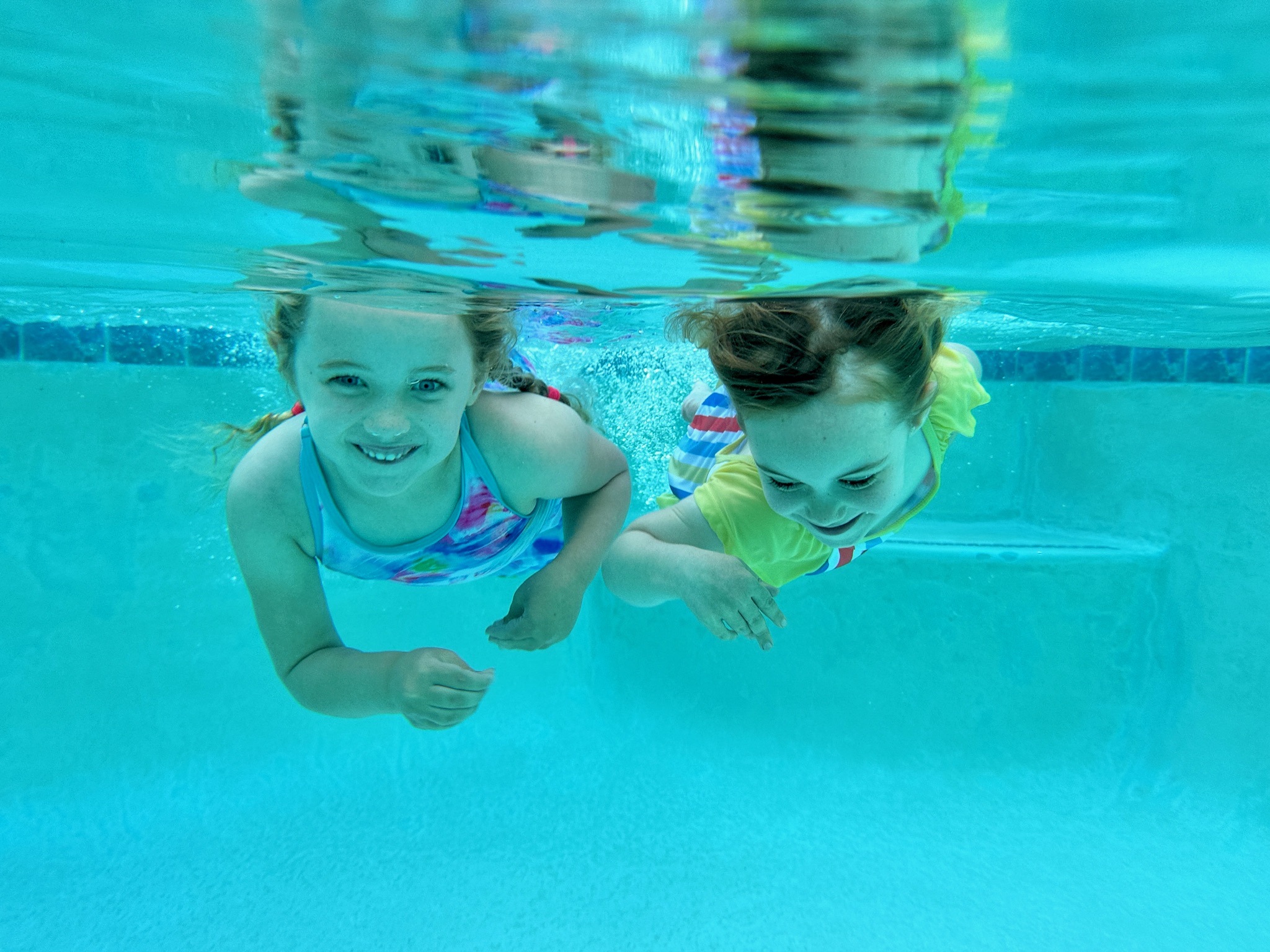
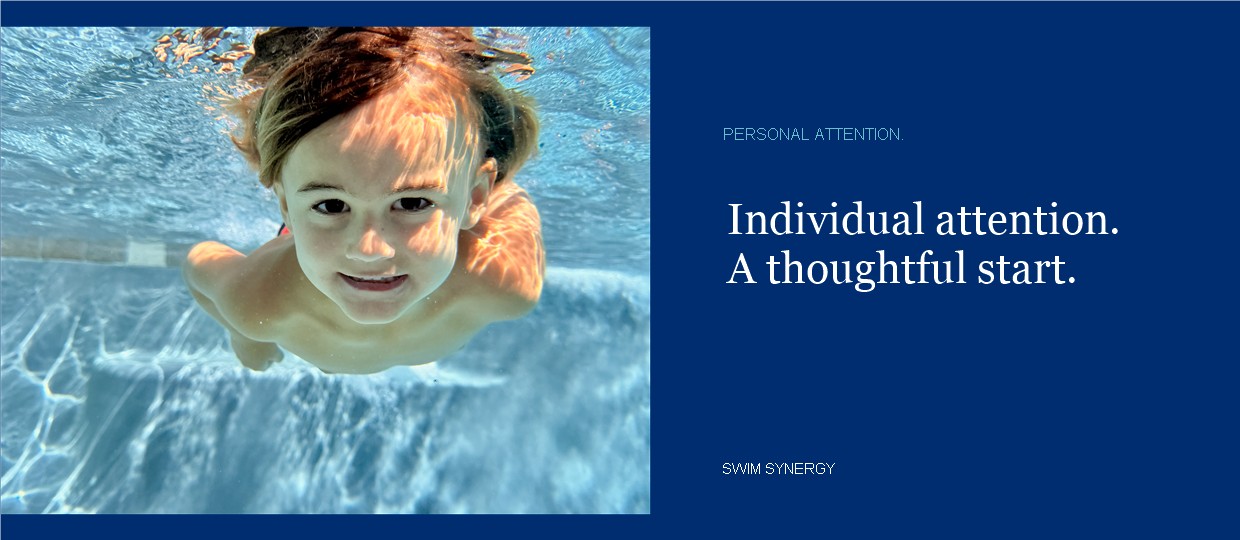
A short, specific description is more useful than a label. These examples are conversation starters—not descriptions of the child pictured above.
Describe the moment.
“She enjoys the steps and pool toys. She becomes upset when her face gets splashed, even if she was happy a moment earlier.”
Then ask: How would you use that information to plan her introduction?
Describe the response.
“When he meets a new adult, he gets quiet and looks back at me. At home, he usually needs a short explanation before trying something unfamiliar.”
Then ask: How should I support communication during the lesson?
Your pre-lesson conversation, in five parts
- What your child already does comfortably. Mention activities you have observed, such as sitting on the steps or entering with a caregiver. Distinguish assisted activities from independent skills.
- What changes their response. Describe splashes, noise, unfamiliar surroundings, separation, or particular requests that seem difficult. Avoid guessing at a cause when you are unsure.
- Previous experiences. Explain what happened in earlier lessons and whether there was a frightening water experience. Share facts without asking the child to perform confidence for the instructor.
- Communication and support. Mention relevant sensory, accessibility, or communication needs. Ask whether the instructor and setting can accommodate them before enrolling.
- Your expectations. Explain what you want to understand after the first lesson: the starting goals, how the instructor responds to hesitation, and what the next appointment might involve.
A personal approach.Have a hesitant swimmer? Tell us what feels difficult so our Drowning Prevention Specialists can help you explore a comfortable starting point.Start registration →Explore our swim lessons →Let’s talk about your swimmer.
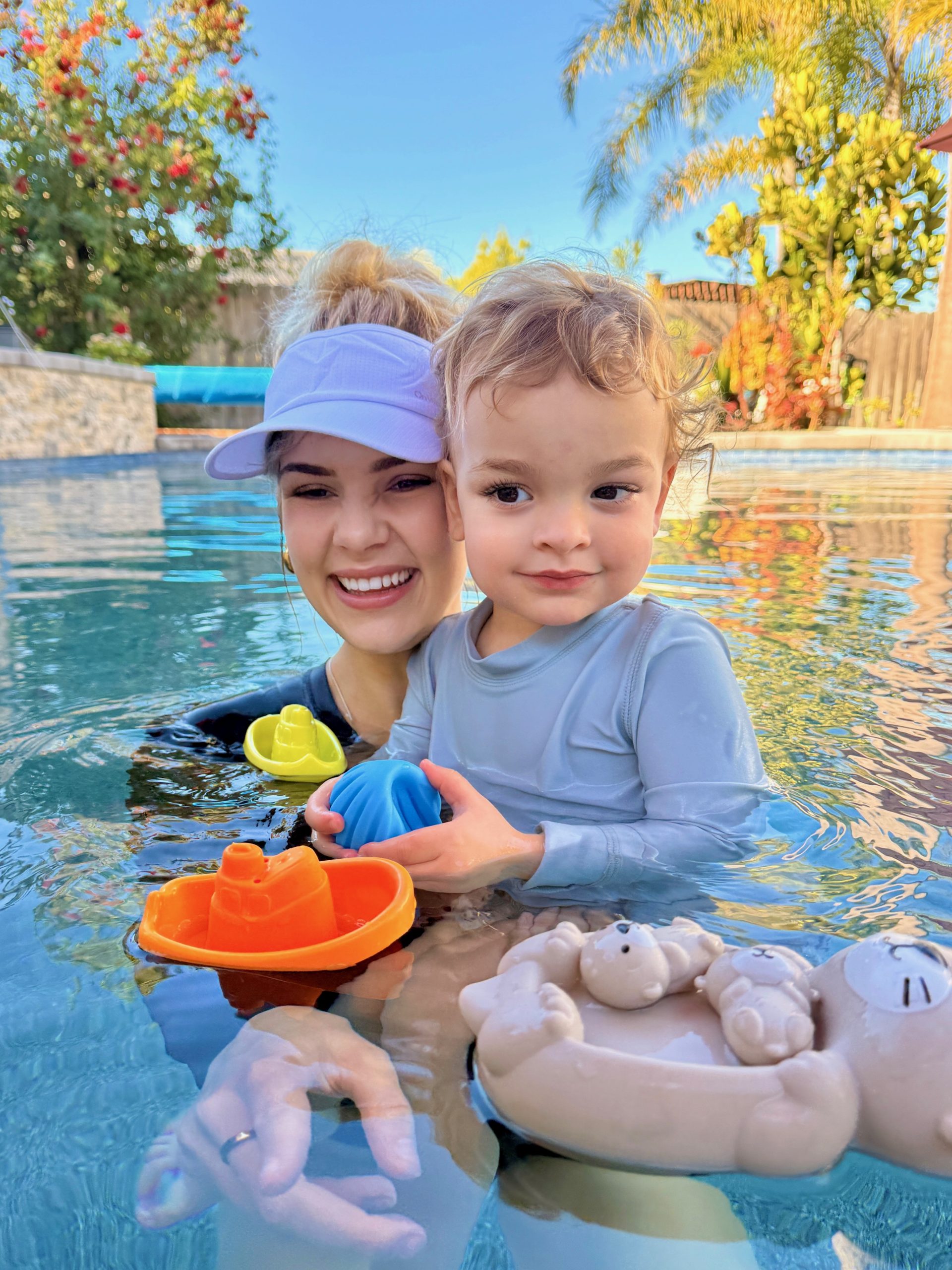
(800) 913-5633 · Contact usMiss Emma, Drowning Prevention Specialist, with a young Swim Synergy student.
Make the first visit easier to understand
Unanswered practical questions can add pressure to an already unfamiliar experience. Confirm the details in advance so the conversation at the pool can focus on your child.
Know the routine.
Confirm the pool address, parking, arrival time, changing arrangements, and what to bring. Ask where the caregiver should wait and how the instructor will greet your child.
Agree on communication.
Ask how the instructor explains activities and what happens if the child becomes distressed. Clarify your role rather than improvising competing instructions from the poolside.
Ask for observations.
What did the instructor notice? Which activities felt comfortable? Where was support needed? What is the next goal? Specific answers make the next conversation more productive.
Clarify any practice advice.
If the instructor suggests practice, ask exactly what is appropriate for your child, what support is required, and what to avoid. Do not assume an activity is safe to repeat independently.
A message you can send before booking
“My child is [age] and has [previous lesson experience]. They enjoy [specific activity], but become hesitant when [specific situation]. They usually communicate discomfort by [observable response]. We are looking near [North County community] and can attend [days or times]. Could we discuss your approach, caregiver involvement, and current availability?”
You do not need to include every detail in the first inquiry. Start with what is most relevant and ask for a conversation about fit.
Questions parents often ask
Does my child have to be confident before we inquire?
No. You can ask about the program while your child is still hesitant. The useful next step is to discuss their needs and the instructor’s approach, rather than assuming a particular lesson format will resolve the concern.
Does enjoying the pool mean my child is ready for every lesson activity?
No. Comfort can vary by setting, task, and instructor. Describe what you have actually observed and ask how the instructor assesses the appropriate starting point.
What if the first lesson feels difficult?
Ask the instructor to explain what they observed and discuss whether the approach, setting, or goals need adjustment. Agree on a next step based on your child’s response rather than comparing the visit with another swimmer’s experience.
How do we know whether the program is a good fit?
Look for clear answers about instruction, distress, caregiver involvement, and progress updates. If you still do not understand how the program would respond to your child’s needs, ask for clarification before committing.